
The Great Candy Chop
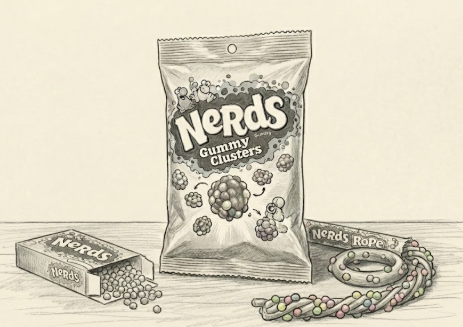
For decades, the candy aisle was a world of rigid segregation. You had your chocolate bars, your gummies, and your hard candies. In this delicious landscape, Nerds were a classic, if slightly underwhelming, player. Invented in 1983, these tiny, crunchy pebbles of sugar were a staple of childhood, but hardly a revolutionary force.
Then there was the Nerds Rope. Launched in 2001, it was a gummy string covered in Nerds. It was weird, sticky, and successful enough to keep the brand relevant to a new generation, but it wasn’t exactly easy to eat if you cared about having a nerd-free floor. It was a sticky whip that defied dignified consumption.
In 2020, the Ferrara Candy Company could have spent millions developing a new candy with a new name, new flavor profile, and new mascot. They could have chased the latest health trend or tried to invent a new molecule of sugar.
Instead, they did something laughably simple. They chopped the rope.
They took the existing gummy center of a Nerds Rope, balled it up into a bite-sized sphere, and covered it in a slightly smaller version of the same basic Nerds they had been selling since the Reagan administration. They called it Nerds Gummy Clusters.
It wasn't a new technology. It wasn't a new flavor. It was essentially just a change in shape.
The result? Absolute pandemonium, in the best possible way.
Nerds Gummy Clusters became a viral sensation, driving the Nerds brand from annual sales of $50 million in 2018 to nearly $900 million in 2024 (according to Ad Age). They revitalized an entire manufacturing plant in Chicago, created hundreds of jobs, ran a Super Bowl ad, got a stamp of approval from Kylee Jenner, and dramatically changed the trajectory of a nearly 40 year old candy brand. From stagnation and mild-likeability to a cultural sensation.
And if you’ll allow me to editorialize for a moment, they’re really really good.
While other companies were trying to invent the next revolutionary candy, Nerds simply looked at their existing pieces, the crunch of the Nerd and the chew of the gummy, and asked, "What if we just made this thing easier to eat?"
Sometimes, the most disruptive innovation isn't a new invention. It's just a better arrangement of the pieces you already have. It’s just a new shape.